

News & Events
Keep Up to Date

As Chain Restaurants Ask For Government Bail-Outs, Most Refuse To Bail Out Sick Hourly Employees
While restaurant owners around the country beg lawmakers to offer them financial relief and assistance to comply with legally mandated orders to temporarily close their dining rooms in an effort to prevent the spread of coronavirus, only a few national chains are doing anything to ensure all of their hourly workers physically and economically survive the pandemic.

Drag & Brunch Bar Bizarre in Bushwick Shuttered and Faces Lawsuit from Employees
An overhanging sign still reads “Bizarre” and the first two vowels are still flipped quixotically, but the rolling gate has remained shut since early June. The bartenders are now suing the shuttered bar. “I don’t know how they’ve been able to get away with it, but they never paid their employees,” one bartender told Bushwick Daily wishing to stay anonymous. They had joined five other coworkers in a lawsuit, filed in federal court earlier in August, demanding over $100,000 in unpaid wages. “The owners made it a living hell to work there,” they said.
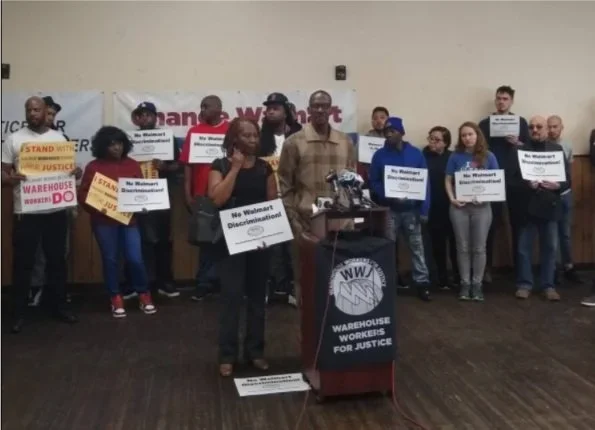
Black Workers Say Walmart’s Background Checks Are Racially Discriminatory
Balentine is one of two Black workers who filed racial discrimination charges against Walmart this week, alleging that the company’s background check policies had a disparate impact on African Americans in the Elwood facility. Between 100 and 200 other African American workers may have been affected, according to Chris Williams, an attorney with the National Legal Advocacy Network, which filed the complaint with the Illinois Department of Human Rights and the U.S. Equal Employment Opportunity Commission (EEOC).

Illinois Manufacturing Workers Locked Out and Fired for One-Hour Strike
Williams filed a complaint with the National Labor Relations Board (NLRB), arguing that the workers’ non-economic strike about discrimination and unfair treatment is protected under the National Labor Relations Act (NLRA), the law governing private sector employees’ collective bargaining rights. He said this situation is a “pretty clear-cut violation” of NLRA Section 8(a)(1) prohibiting interference with the right to organize and Section 8(a)(3) concerning adverse actions like a lockout.
